
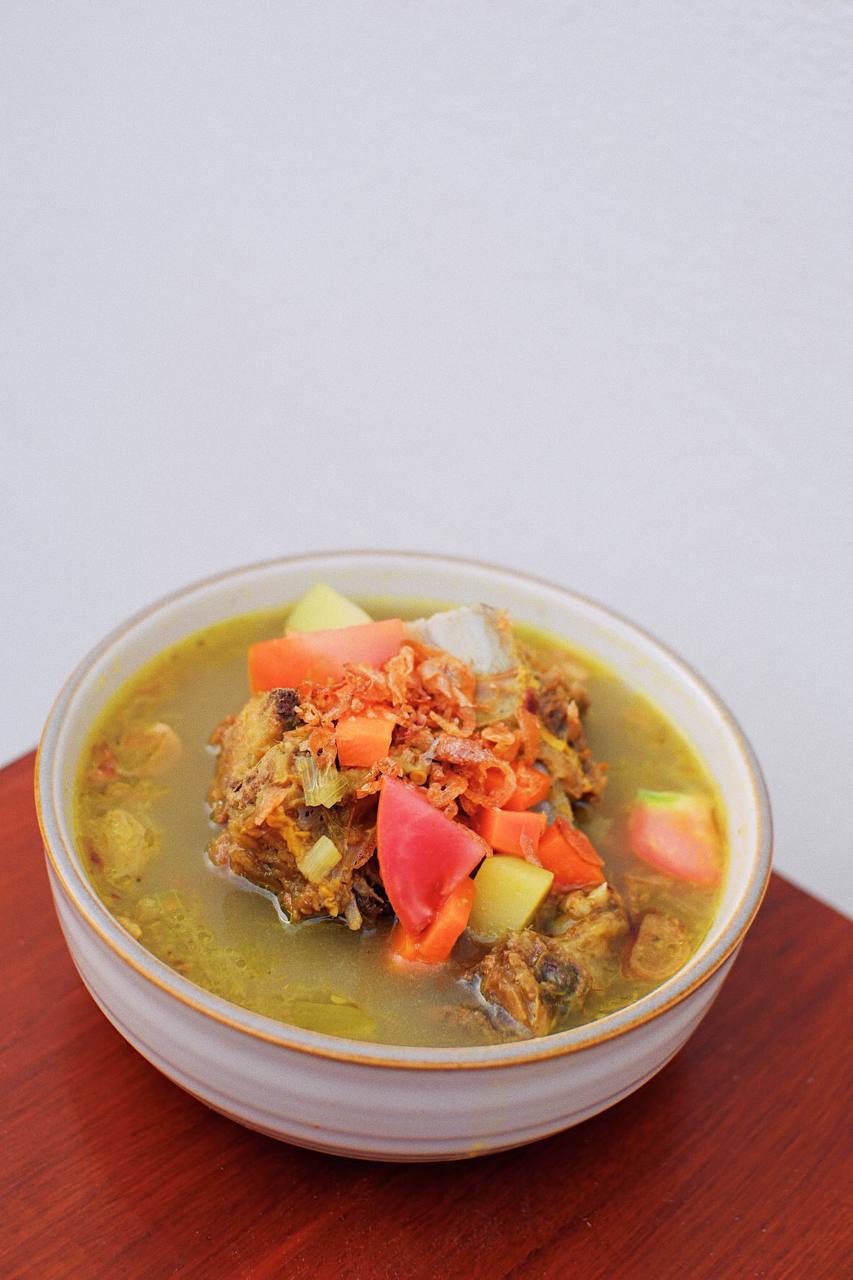
Tender oxtail simmered until it falls off the bone, in a warm turmeric-spiced broth loaded with carrot, potato, and tomato, and finished with a scattering of crispy fried shallots. This is the kind of soup that feels like a hug in a bowl — rich, savory, and deeply comforting.
Sop Buntut is a classic Indonesian soup traditionally made by slow-simmering oxtail with aromatics until the meat is fork-tender and the broth turns rich and fragrant. It takes a bit of patience, but almost all of it is hands-off simmering time, making it an easy dish to prepare on a weekend or whenever you have a few hours at home.
Sop Buntut has a special place in my heart because it reminds me of the long simmering pots we used to keep going for hours in the restaurant where I worked. Getting the oxtail right takes patience — you need that low, steady simmer until the meat practically falls off the bone and the broth turns rich and golden. Back then, we’d season it with whole spices and let it sit overnight before serving, and I still follow that same rule at home whenever I have the time. The fresh tomato, carrot, and potato aren’t just for color — they cut through the richness of the broth and keep every spoonful balanced. And that final scatter of crispy fried shallots on top? That’s non-negotiable for me. It’s a dish that takes effort, but every time I make it, it brings back the satisfaction of pulling a perfect pot off the stove after a long shift.
Bahan-bahan
For the Broth
- 2 lbs (900 g) oxtail, cut into segments
- 8 cups (2 L) water
- 3 cloves garlic, smashed
- 4 shallots, peeled and halved
- 1-inch (2.5 cm) piece ginger, smashed
- 1-inch (2.5 cm) piece turmeric, smashed (or 1 tsp ground turmeric)
- 2 bay leaves
- 2 lemongrass stalks, bruised
- 1 tsp whole white peppercorns
- 1 tbsp cooking oil
- 1½ tsp salt, plus more to taste
For the Vegetables
- 2 medium carrots, cut into chunks
- 2 medium potatoes, peeled and cubed
- 1 medium tomato, cut into wedges
- 2 green onions, sliced
- ¼ cup chopped celery leaves or Chinese celery
For Garnish
- ½ cup crispy fried shallots (bawang goreng)
- Steamed white rice, for serving
- Lime wedges, for serving
- Sliced red chili or sambal, optional
Substitusi Mudah
- Oxtail: Beef short ribs or beef shank can be used if oxtail isn’t available, though cooking time may be slightly shorter.
- Fresh turmeric: Ground turmeric works fine in place of fresh; use about 1 teaspoon.
- Fried shallots: Store-bought crispy fried shallots save time if you don’t want to fry your own.
- Celery leaves: Regular celery stalks, thinly sliced, can be used instead.
Instruksi Memasak Langkah demi Langkah
1. Blanch the oxtail. Place the oxtail in a large pot, cover with water, and bring to a boil for 5 minutes. Drain and rinse the oxtail under cold water to remove impurities. This step keeps the broth clear.
2. Build the broth. Return the blanched oxtail to a clean pot with 8 cups of fresh water. Add the garlic, shallots, ginger, turmeric, bay leaves, lemongrass, and peppercorns. Bring to a boil, then reduce to a low simmer.
3. Simmer until tender. Cover partially and simmer for 2 to 2½ hours, skimming off any foam that rises to the top, until the oxtail is very tender and the broth is fragrant. Stir in the oil and salt in the last 30 minutes of cooking.
4. Cook the vegetables. Add the carrot and potato chunks to the pot and simmer for 15–20 minutes, until just tender. Add the tomato wedges in the last 5 minutes so they hold their shape.
5. Finish the soup. Taste the broth and adjust the salt if needed. Stir in the green onions and celery leaves just before serving.
6. Serve. Ladle the soup into bowls, making sure each portion gets plenty of oxtail and vegetables. Top generously with crispy fried shallots and serve hot with steamed rice, lime wedges, and sambal on the side.
Tips for Better Results
- Blanch first: Don’t skip the blanching step — it removes impurities and gives you a much clearer, cleaner-tasting broth.
- Low and slow: Keep the broth at a gentle simmer rather than a rolling boil; this keeps the meat tender instead of tough and stringy.
- Skim as you go: Removing the foam every 20–30 minutes during simmering keeps the broth clear and prevents a muddy flavor.
- Fry the shallots ahead: If making your own fried shallots, prepare them a day in advance and store them in an airtight container so they stay crisp.
Penyimpanan & Pemanasan Ulang
Storage: Let the soup cool completely before transferring it to an airtight container. Store the broth and oxtail together in the refrigerator, but keep the fried shallots separate so they stay crunchy.
How long does it last? Refrigerate leftovers within 2 hours of cooking and use within 3–4 days when stored at 40°F (4°C) or below. The soup also freezes well for up to 2 months.
Reheating: Warm the soup gently on the stovetop over medium-low heat until heated through, or microwave in short intervals, stirring in between. Add fresh fried shallots and lime just before serving.
Kartu Resep
Prep Time: 20 mins Cook Time: 2 hrs 45 mins Total Time: 3 hrs 5 mins Servings: 6 servings
Bahan-bahan
- 2 lbs (900 g) oxtail, cut into segments
- 8 cups (2 L) water
- 3 cloves garlic, smashed
- 4 shallots, halved
- 1-inch piece ginger, smashed
- 1-inch piece turmeric, smashed (or 1 tsp ground turmeric)
- 2 bay leaves
- 2 lemongrass stalks, bruised
- 1 tsp whole white peppercorns
- 1 tbsp cooking oil
- 1½ tsp salt, plus more to taste
- 2 medium carrots, cut into chunks
- 2 medium potatoes, cubed
- 1 medium tomato, cut into wedges
- 2 green onions, sliced
- ¼ cup chopped celery leaves
- ½ cup crispy fried shallots, for garnish
Estimated Nutrition Information (Per Serving)
- Calories: ~340 kcal
- Protein: 24 g
- Carbohydrates: 18 g
- Fat: 19 g
- Fiber: 3 g
Nutrition information is an estimate and may vary depending on the type of meat, ingredients, brands, and portion sizes used.
MADE BY IAN LAADAM
Leave a Reply